This is part 2 of an ongoing series tracking fictional freshman Robert Smith and how Opening Doors helped him and his school make it a better year.
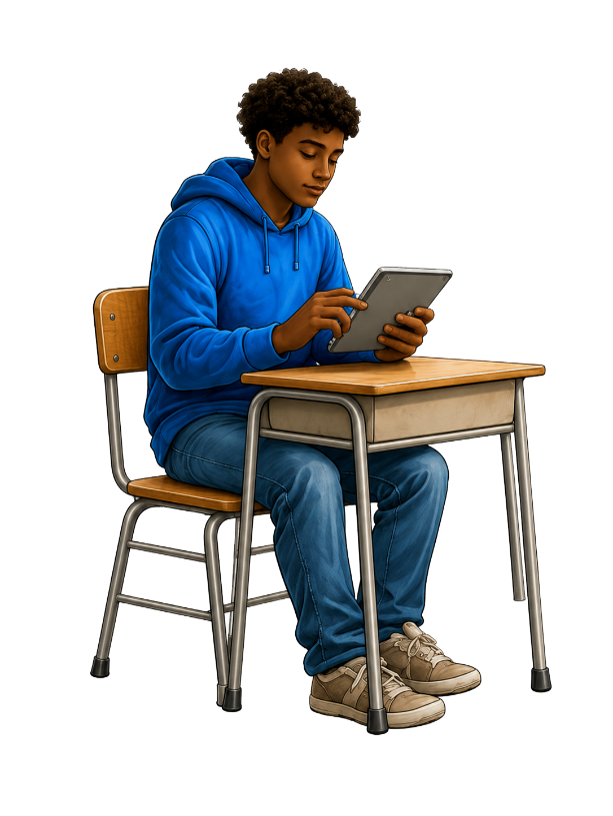
What Do You Want to Be When You Grow Up?
Robert’s teacher framed it simply: the Future You survey was designed to help answer a question that stumps plenty of adults. What do you want to do with your life and why?
He started checking boxes next to skills he felt confident about: helping people work through conflicts, doing the right thing even when it was hard, solving puzzles, being creative, building and fixing things. Those came easily. A few others gave him pause — he’d never thought of them as “skills” before — but he checked them anyway.
Then came a set of questions about how and where he’d want to work: indoors or outside, independently or on a team, with his hands or at a desk. He’d never thought about work that way. He found himself thinking about his best study sessions. Always at the kitchen table with music on, never alone in his room. He realized that probably said something about him.
The last question asked what he planned to do after high school. College had always been the assumed answer. After all, his parents expected it and his older sister was already there. But seeing the other options laid out — workforce, apprenticeship, military, trade school — made him think about it rather than just assume. He chose college. But it felt more like a decision this time.
A Dashboard Full of Surprises
His teacher directed the class to log into their Opening Doors dashboards.
What Robert found was much more specific than the list of jobs and links he’d expected. His top career match was social worker. The dashboard showed exactly which of his checked skills had driven that result. The conflict resolution, the sense of ethics, the desire to work closely with people. That made sense to him.
His second match was civil engineer. He almost scrolled past it.
He’d never pictured himself as an engineer. That was something other kids did — the ones who were really into math, who built robots in their spare time. But the dashboard explained the connection: his puzzle-solving instinct, his hands-on orientation, his interest in building things. When he clicked through to the career detail page and read about what civil engineers do every day — designing bridges, planning city infrastructure, solving real-world problems — something clicked. He didn’t know if it was the right path, but it was one he wanted to take a few steps on. He added it to his list.
By the time he was done exploring, he’d “trophied” four careers he wanted to learn more about: social worker, civil engineer, urban planner, and physical therapist. Four very different paths, but all of them traced back to something real about who he was.
What Sarah Saw — and What She Did About It
While her students explored their results, Sarah pulled up the aggregate reports in the Opening Doors portal. The data told a story she recognized: a large share of freshmen were planning on college, while a meaningful number of juniors were uncertain about their path entirely, just as they had been for two years.
She also looked at which career clusters were drawing the most interest across grade levels. Healthcare and social services were dominant, especially among girls. Skilled trades barely registered, despite the substantive job shadow and apprenticeship opportunities she’d been able to bring in through the Community Connect program.
Community Connect was how Sarah brought the outside world into the school’s Opening Doors platform. Local businesses and organizations could submit events — job shadows, volunteer days, career fairs, speaking opportunities — which Sarah reviewed and approved to appear on student dashboards. The Rotary Club partnership alone had brought in a dozen community leaders willing to connect with students.
Now she had a clearer picture of how to use those connections. She’d promote the skilled trades job shadows more intentionally, especially to students whose results pointed that direction but who might not think to look. And she’d use the career cluster data to shape the lineup at the upcoming career fair.
She could even begin to build out the course guide for next school year to make sure classes related to the most popular career clusters would have enough spots.
The Right Event for the Right Student
The next morning, Robert logged back into his dashboard before first period. New events had appeared and a few of them matched his career interests. The career fair was coming up, and two of his trophied careers had booths listed. There was also a job shadow opportunity at a local engineering firm.
Three weeks ago, he wouldn’t have known what to do with that information. Now he had a reason to show up.
Opening Doors is built using flexible modules that work alone or together. This post highlights the Future You and Community Connect modules.
You can start with what module(s) matters most to your district right now and add more when you’re ready.
To learn more, visit openingdoors4students.com.
Up next: Robert uses the College Match tool to figure out where he might actually want to go — and starts planning his sophomore courses with a goal in mind.